Blackjack Guide for Jaiho 777 Readers in India
Blackjack is one of the most studied card games in casino literature because it has a clearer decision structure than many wheel or instant-result formats. The player is not only watching a random outcome appear; they are also deciding how to respond to a visible hand. This makes blackjack feel more tactical than roulette or many fast table games, but it should still be treated carefully. A good Jaiho 777 guide should explain the rules, the table rhythm, the player choices, and the limits of control without presenting the game as a financial opportunity.
The basic idea is simple. A blackjack hand is built around the value 21. Number cards usually keep their face value, picture cards count as 10, and an Ace can count as 1 or 11 depending on the hand. The player compares their hand against the dealer’s hand, not against other players. The aim is to finish closer to 21 than the dealer without going over. If the hand goes above 21, it is bust. This is the main rule that gives the game its tension.
Blackjack is different from many chance-led games because the player sees part of the situation before making a decision. A player can choose to take another card, stand with the current hand, or use other options depending on the table version. However, this does not mean the game becomes fully controllable. The next card is still unknown, the dealer follows fixed rules, and each version may use different table conditions. The correct way to present blackjack is not as a guaranteed strategy game, but as a card game where informed decisions can reduce confusion while risk remains.
For an India-oriented page, the tone should stay measured. Online money gaming rules, age restrictions, identity checks, and responsible-use tools should always be treated seriously. Readers should review local requirements and platform terms before interacting with any real-money environment. A professional casino information page should not pressure users to act. It should help adult readers understand what the game involves.
Internal navigation can be used naturally without making the content look aggressive. A reader may use Login only for account access, review Bonus terms as a policy section, check Sign up requirements for eligibility information, open the App page for device guidance, compare Slots as a separate category, browse Games for catalogue context, read the FAQ for common answers, and use Links for policy or support pages. These labels should work as site structure, not as repeated promotional keywords.
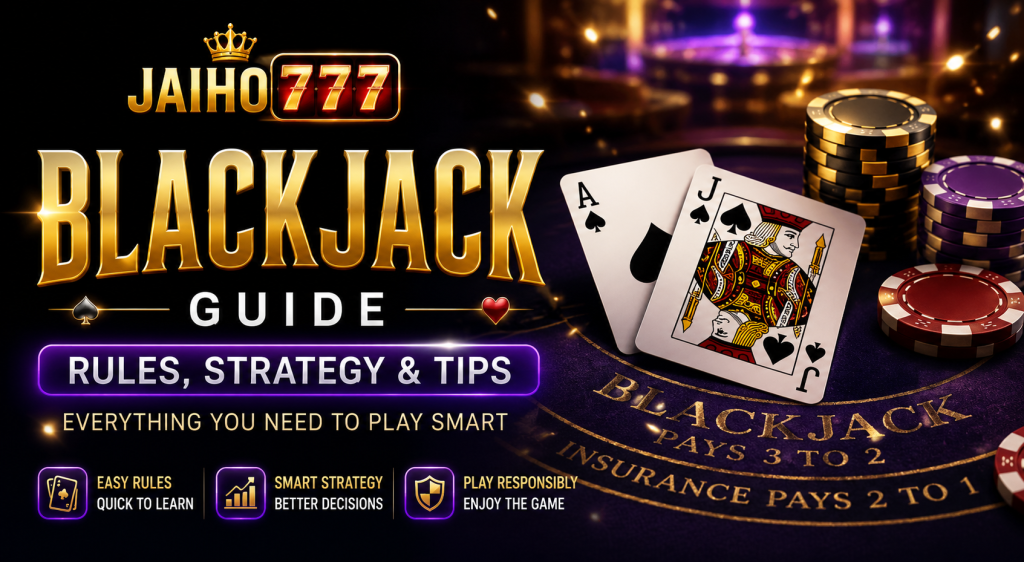
How a Blackjack Round Usually Works
A blackjack round begins with the player receiving cards and the dealer receiving cards. The exact presentation depends on whether the table is digital, live dealer, or a specific variant, but the central comparison remains similar. The player reads their hand total, considers the dealer’s visible card, and chooses how to continue. The dealer then completes their hand according to the table rules.
The most common player choices are hit and stand. Hit means taking another card. Stand means keeping the current total and ending the player decision for that hand. Some versions also include double down, split, or insurance-style side options. These features should be explained carefully because they can change the pace and complexity of the table. A beginner should not treat every button as equally suitable. Understanding what each option does is part of reading the table properly.
The dealer does not usually make emotional choices. Dealer action follows fixed rules, such as drawing cards until a certain total is reached. This gives blackjack its structured feel. The player makes decisions, while the dealer follows a rule path. That structure is why many readers find blackjack easier to analyse than games where the user has no active decision after the round starts.
Still, blackjack should not be described as predictable. Even when the player makes a reasonable decision, the next card can change the hand immediately. A hand that looks strong can lose, and a weak hand can improve. This uncertainty is not a side detail; it is part of the game. A trustworthy guide should make the player decision model clear while avoiding the false impression that knowledge removes risk.
Open each block to review the essential parts of a blackjack round before studying table versions and decision rules.
Hand Value
Meaning: Blackjack hands are counted toward 21. Number cards keep their value, face cards count as 10, and Aces may count as 1 or 11.
Reader note: The hand total is the first thing to understand before looking at any table option.
Player Goal
Meaning: The player tries to finish closer to 21 than the dealer without going over 21.
Reader note: Blackjack is played against the dealer’s hand, not against other players at the table.
Dealer Rule Path
Meaning: The dealer usually follows fixed table rules for drawing and standing.
Reader note: The dealer’s rule path creates structure, but it does not remove uncertainty from card order.
Hit or Stand
Meaning: Hit means taking another card. Stand means keeping the current hand total.
Reader note: These two decisions are the foundation of blackjack table reading.
Extra Table Options
Meaning: Some tables may include split, double down, insurance-style options, or side areas.
Reader note: Additional options should be reviewed in the rules before use because they can change risk and session pace.
India Safety Context
Meaning: Indian readers should review local rules, age requirements, account conditions, and responsible-use information.
Reference: Ministry of Electronics and Information Technology
Why Blackjack Feels More Strategic Than It Is
Blackjack often feels strategic because the player has visible information. A hand total of 12 feels different from a hand total of 20. A dealer’s visible card can also influence how the table situation is read. This makes the game more interactive than formats where the user simply waits for a wheel, reel, or instant result. However, interaction should not be confused with certainty.
A reader can make more informed choices when they understand the card values and the table rules. That is the educational part of blackjack content. The risk appears when strategy language becomes exaggerated. Some articles make blackjack sound like a game that can be solved by ordinary users in every session. That is not an honest way to present it. Card order, table version, shuffle method, and rule details all matter, and the player never sees the future card before choosing.
The best Jaiho 777 page should explain blackjack as a decision-based card game with limits. It should show why reading the hand matters, why table rules should be checked, and why emotional decisions are risky. It should also explain that no single paragraph, shortcut, or casual system can remove uncertainty from the game.
Responsible Blackjack Reading for Indian Users
For Indian readers, blackjack content should include more than rules. It should include eligibility, safety, and self-control. Any online table game connected to real money requires extra caution. Readers should check whether the platform provides clear rules, visible account settings, responsible-use information, and accessible support pages. They should also understand that laws and restrictions may differ by location and may change over time.
Responsible blackjack reading begins before the table opens. A reader should know the card values, the available decisions, the dealer rule path, and the table version. They should also know when they would stop. If the reader cannot describe these things clearly, they should keep reading rather than moving into active participation.
Blackjack is a strong topic for a casino guide because it has structure, vocabulary, and decision points. That makes it interesting to explain. But a serious page should never turn that structure into false confidence. The most accurate framing is simple: blackjack is easier to study than many casino games, but it remains uncertain, fast-moving, and suitable only for informed adults who understand the risk.
Blackjack Table Versions and Why Rules Matter
Blackjack is often described as one game, but online blackjack tables can differ in ways that matter. Some tables use fewer decks, some use several decks, some allow splitting only under certain conditions, and some change how the dealer plays a soft 17. Live dealer blackjack can also feel very different from a standard digital table because the round pace, visual presentation, and decision timer are not the same. A serious Jaiho 777 guide should explain these differences clearly so readers do not assume that every blackjack table follows identical rules.
The first point to check is the dealer rule. In many blackjack versions, the dealer must draw until reaching a specific total. The important detail is whether the dealer stands or hits on soft 17. A soft hand contains an Ace counted as 11 without busting the hand. This one rule can change the table’s mathematical profile and should be visible in the rules panel. Readers who skip this detail may misunderstand how the dealer completes the hand.
The second point is the number of decks. A single-deck table may look simpler, but many online tables use several decks or continuous shuffling systems. The deck structure affects how the game is presented and how the rules are written. It should not be treated as a small cosmetic detail. Any blackjack page that wants to look professional should explain that table conditions are part of the game, not background decoration.
The third point is the availability of extra decisions. Split, double down, surrender, insurance, and side areas may appear depending on the version. These features can make the table feel more flexible, but they also increase the number of decisions a player must understand. A beginner who knows only hit and stand should read the rules before assuming that every button is useful in every situation.
Why Blackjack Is Not the Same as Other Table Games
Blackjack has a different rhythm from roulette, baccarat, Andar Bahar, or instant-result titles. In roulette, the user reads a wheel layout and waits for one final pocket. In baccarat, the rules often determine much of the drawing process. In Andar Bahar, the main decision is usually between two sides before the matching rank appears. Blackjack gives the player more visible decision points, which is why it often feels more interactive.
This interaction can be useful for learning. A reader can understand hand totals, dealer upcards, and basic table options. However, interaction should not be presented as full control. The user still does not know the next card. The dealer’s hidden card remains unknown until revealed. The shuffle structure and table rules also shape the round. This is why blackjack content should use careful language: the game includes decisions, but it remains uncertain.
A strong casino information page should also avoid oversimplifying blackjack strategy. Some readers may have heard that blackjack is a skill game. That phrase can be misleading when used without context. Blackjack contains decision-making, but the outcome still depends on card order and table rules. A responsible article should explain that good reading reduces confusion; it does not guarantee results.
For Indian readers, this distinction is particularly important because online gaming content should avoid implying financial certainty. The article should present blackjack as an adult card-game topic that requires rule awareness, restraint, and local compliance checks. It should not frame the game as a shortcut to income or a predictable system.
Move through each stage before reading or interacting with any online blackjack table.
01 Check the Table Version
What to review: Identify whether the table is digital, live dealer, multi-hand, classic, or a variant with side areas.
Why it matters: Different versions may change pace, interface design, available decisions, and rule presentation.
02 Read the Dealer Rule
What to review: Look for whether the dealer stands or hits on soft 17 and how the dealer completes the hand.
Why it matters: Dealer behaviour is fixed by the table rules, so this detail should be clear before the hand begins.
03 Review Deck Information
What to review: Check whether the game uses one deck, multiple decks, or a continuous shuffle format.
Why it matters: Deck structure affects how the table is described and should not be ignored in serious blackjack content.
04 Understand Player Options
What to review: Confirm whether hit, stand, split, double down, surrender, or insurance-style options are available.
Why it matters: Extra buttons can create confusion if the reader does not know what each action means.
05 Check Limits and Timing
What to review: Review table limits, decision timers, round speed, and mobile readability.
Why it matters: A fast decision timer can pressure users into reacting before they understand the hand.
06 Set a Responsible Boundary
What to review: Decide a session length, stopping point, and personal limit before any active participation.
Why it matters: Blackjack decisions can feel tactical, but planned restraint is still the most important protection.
Understanding Soft Hands and Hard Hands
One of the first concepts that makes blackjack more detailed is the difference between soft and hard hands. A soft hand contains an Ace that can count as 11 without pushing the total above 21. A hard hand either does not contain an Ace, or the Ace must count as 1 to prevent the hand from going over 21. This difference matters because the same visible total can behave differently depending on whether the Ace is flexible.
For example, a hand containing Ace and 6 is usually described as soft 17 because the Ace can count as 11. If another card is drawn, the Ace can shift to 1 if needed. A hard 17 has less flexibility. This is why blackjack guides often spend time explaining soft totals. Without this concept, a reader may not understand why two hands with the same number can be treated differently.
The dealer’s soft 17 rule is also important. Some tables require the dealer to stand on soft 17, while others require the dealer to hit. This rule should never be hidden in small print or ignored by an expert guide. It changes how the table operates and should be reviewed before any comparison between versions.
Soft hands also show why blackjack feels more tactical than many other casino games. The player is not merely looking at one static number. They are reading how flexible the hand is and how the next card could change it. Still, this flexibility is not a guarantee. It only gives the hand more room before busting. The next card remains unknown.
Why Side Options Need Extra Caution
Many blackjack tables include side areas or additional decisions. These can make the game look richer, but they can also distract new readers from the core hand. The main game is already built around hand value, dealer information, and table rules. Side options add another layer that should not be entered casually.
Insurance-style options are one example. They may appear when the dealer shows a specific card, and beginners may assume they are protective because of the name. That assumption can be misleading. The name of an option does not automatically make it suitable or safer. A responsible page should explain that any extra feature should be understood through rules, not through wording alone.
Side areas can also change the visual focus of the table. A reader may start paying more attention to optional panels than to the main blackjack hand. This is a common problem in online table design. The interface may be polished and easy to use, but extra features can make the experience more complex than the original game.
For Jaiho 777, a strong article should advise readers to learn the base table first. Hand values, dealer rules, hit, stand, and version details come before optional features. If a reader cannot explain the main round clearly, side options should be ignored until the rules are understood.
Live Blackjack and Mobile Blackjack Experience
Live blackjack has a different pace from standard digital blackjack. The dealer manages the table, cards are dealt in real time, and users may have a fixed decision timer. This can make the game feel more authentic, but it can also create pressure because decisions must be made within the table’s timing. A user who is still learning may feel rushed if they enter a live table before understanding the rules.
Digital blackjack is often faster and more private. It may allow quicker rounds, instant dealing, and a cleaner interface. This can be easier for learning table structure, but it can also lead to rapid repetition. A fast digital table can produce more decisions in a short session than a live table. That is why session boundaries are necessary in both formats.
Mobile blackjack adds another layer. The screen is smaller, buttons are closer together, and repeated actions can become very quick. A good mobile layout should make card values readable, decisions clear, and rules easy to open. If the interface hides important information or makes decisions too frictionless, the reader should treat it cautiously.
A polished blackjack guide should not rank live, digital, or mobile formats as automatically better. The useful comparison is about pace, clarity, and pressure. Live tables feel immersive. Digital tables are faster. Mobile tables are convenient. Each format requires the same responsible foundation: know the rules, read the table, understand the hand, and stop at the planned boundary.
Move through each stage before reading or interacting with any online blackjack table.
01 Check the Table Version
What to review: Identify whether the table is digital, live dealer, multi-hand, classic, or a variant with side areas.
Why it matters: Different versions may change pace, interface design, available decisions, and rule presentation.
02 Read the Dealer Rule
What to review: Look for whether the dealer stands or hits on soft 17 and how the dealer completes the hand.
Why it matters: Dealer behaviour is fixed by the table rules, so this detail should be clear before the hand begins.
03 Review Deck Information
What to review: Check whether the game uses one deck, multiple decks, or a continuous shuffle format.
Why it matters: Deck structure affects how the table is described and should not be ignored in serious blackjack content.
04 Understand Player Options
What to review: Confirm whether hit, stand, split, double down, surrender, or insurance-style options are available.
Why it matters: Extra buttons can create confusion if the reader does not know what each action means.
05 Check Limits and Timing
What to review: Review table limits, decision timers, round speed, and mobile readability.
Why it matters: A fast decision timer can pressure users into reacting before they understand the hand.
06 Set a Responsible Boundary
What to review: Decide a session length, stopping point, and personal limit before any active participation.
Why it matters: Blackjack decisions can feel tactical, but planned restraint is still the most important protection.
Blackjack Decision Patterns and Common Misunderstandings
Blackjack often attracts readers because it looks more logical than many other casino table formats. The player receives cards, sees a total, observes the dealer’s visible card, and then makes a decision. This visible structure creates the impression that the game can be fully managed through clever timing or confidence. A professional Jaiho 777 guide should treat that impression carefully. Blackjack does involve choices, but those choices operate inside a system where the next card is unknown and the dealer’s hidden card is not visible at the moment of decision.
The most common misunderstanding is the idea that a strong-looking hand always means control. A total of 20 may look excellent, but it can still lose to a dealer blackjack or equal another 20. A weak-looking hand may improve with the next card, but it may also bust immediately. Blackjack is a game of hand reading, not certainty. The player can understand the situation better than in many purely outcome-based formats, yet no reader should confuse informed action with guaranteed success.
Another misunderstanding appears around dealer upcards. The visible dealer card gives useful context, but it is not the full dealer hand. A dealer showing a low card may still complete a strong total. A dealer showing a strong card may still fail to build a better hand. This is why blackjack content should avoid exaggerated strategy claims. A guide can explain how players read table information, but it should not imply that any visible card guarantees what happens next.
A responsible article should also explain that blackjack decisions happen under pressure. Online tables may include timers, quick buttons, auto prompts, or live dealer pacing. These features can make the game feel smooth, but they may also reduce the time available for careful reading. The best approach is to understand the table before the decision window appears. If the rules are unclear, the reader should keep studying the page rather than relying on instinct.
Why Hand Reading Matters More Than Guesswork
Hand reading in blackjack begins with knowing the value of each card. Number cards are direct, picture cards count as 10, and Aces can create flexible totals when counted as either 1 or 11. Once the total is known, the reader can think about whether the hand is soft, hard, low, medium, or already strong. This basic reading step is more useful than trying to predict the exact next card.
A hard hand has less flexibility because it cannot safely use an Ace as 11. A soft hand gives more room because the Ace can change value. This is one of the reasons blackjack feels more technical than roulette or Andar Bahar. A hand may not be defined only by the number shown. It may also be defined by how much flexibility remains after the next card. Good content should explain this without making the concept sound more difficult than it is.
Guesswork becomes risky when a reader starts acting from emotion instead of table awareness. If the last hand was frustrating, the next decision may feel like a chance to recover. If the previous result was positive, the reader may become overconfident. Both reactions weaken judgement. Blackjack should be read hand by hand, not as a story where the next result must compensate for the previous one.
A careful blackjack guide should also separate learning from participation. It is useful to understand card values, dealer behaviour, and available decisions. It is not useful to turn every concept into a promise of advantage. The strongest editorial tone is calm and exact: blackjack gives the player decisions, but the game still depends on uncertain card order and strict table rules.
Open each block to review how key blackjack situations should be understood before comparing table formats.
Low Hand Total
What it means: A low hand total is usually far from 21 and may require another card depending on the table situation.
What to remember: A low total is not automatically safe. The next card may help the hand or create a worse position.
Medium Hand Total
What it means: A medium total often creates the most difficult reading moment because the hand is neither clearly weak nor clearly strong.
What to remember: This is where table rules and dealer upcard awareness become especially important.
Strong Hand Total
What it means: A strong hand is closer to 21 and may look comfortable at first glance.
What to remember: Strong does not mean guaranteed. The dealer may still equal or beat the total depending on the final hand.
Soft Hand
What it means: A soft hand includes an Ace that can count as 11 without causing the hand to bust.
What to remember: Soft hands are flexible, but flexibility is not the same as certainty.
Hard Hand
What it means: A hard hand has no flexible Ace counted as 11, or the Ace must count as 1 to avoid busting.
What to remember: Hard hands require careful reading because the next card may quickly push the total over 21.
Dealer Upcard
What it means: The dealer’s visible card gives partial information about the dealer’s possible final hand.
What to remember: The hidden card is still unknown, so the upcard should be treated as context, not a guarantee.
Decision Timer
What it means: Online and live tables may limit how long the player has to make a decision.
What to remember: If the timer feels too fast, the table may not be suitable for careful reading.
Responsible Exit Point
What it means: A session should have a clear stop point before any table interaction begins.
What to remember: A planned boundary is more reliable than deciding while emotionally involved in the hand.
Popular Casino-Style Titles Indian Readers Often Compare
Many Indian readers who study blackjack also compare it with other casino-style titles because each format creates a different kind of session. Blackjack is card-based and decision-led. Roulette is wheel-based and visual. Andar Bahar is fast, direct, and familiar to many Indian users. Baccarat is more formal and often presented through live dealer tables. Teen Patti has strong regional recognition and a social-card identity. These comparisons help readers understand the catalogue without assuming that one title is automatically safer or easier.
Other recognisable formats include Dragon Tiger, Sic Bo, live game-show tables, Dream Catcher-style wheel formats, Aviator-style crash games, cricket-themed instant titles, fruit-machine reels, mythology-inspired reel titles, jackpot-style titles, and live poker-style rooms. Each format has a different pace, visual structure, and decision depth. A strong article should explain these differences as catalogue context, not as a push toward participation.
Blackjack occupies a specific position in this wider environment. It is more decision-heavy than roulette and many instant formats, but less socially complex than poker. It has clearer hand values than Teen Patti, but more visible player choices than baccarat. This makes it useful for readers who want to understand how casino card tables are structured. At the same time, the game should not be presented as an easy route to control. The player can make decisions, but the cards still decide the outcome.
A professional Jaiho 777 page should therefore use comparisons carefully. Catalogue awareness can improve the reader’s understanding, but it should not become promotional language. The goal is to help Indian readers identify the nature of blackjack, recognise how it differs from other table formats, and understand why responsible limits matter across every category.
Why Basic Strategy Should Be Explained Carefully
Blackjack is often linked to basic strategy, which can make the game sound more technical and more controllable than it really is. Basic strategy is usually a decision framework built around hand totals, dealer upcards, and table rules. It can help reduce random guessing, but it does not guarantee a positive result. The player still receives unknown cards, the dealer still has a hidden card, and the table still follows its own version rules.
A responsible guide should not avoid the term completely, because many readers will search for it. However, the explanation should be cautious. Basic strategy is not a magic system. It is a structured way to read common situations. It depends on rules, deck information, and the exact table format. A simplified chart taken out of context can mislead beginners if they do not understand which version it applies to.
The strongest way to discuss strategy is to connect it with learning rather than promotion. Readers can study hand types, dealer behaviour, and decision logic. They can compare soft hands with hard hands and understand why some totals feel more flexible than others. This makes the page informative. What the page should not do is promise that studying a strategy chart will remove risk.
Strategy language also needs to avoid emotional escalation. Some users may treat every decision as proof of skill and become frustrated when a reasonable choice still loses. This is a common issue in decision-led games. A good article should explain that a correct or sensible decision can still lead to an unfavourable result. That is not a contradiction. It is the nature of playing with unknown cards.
How Blackjack Interfaces Shape Behaviour
The interface can influence how blackjack feels. A clean table with readable cards, clear totals, and simple buttons helps the reader follow the round. A crowded table with multiple side panels, rapid prompts, and aggressive visual effects can make the experience harder to read. Because online blackjack relies on quick decisions, interface clarity should be part of any expert review.
Live blackjack interfaces often show the dealer, table, player seats, timer, chat area, and result panel. This creates a studio atmosphere, but it also adds visual information. Some readers may enjoy the realism, while others may find the timer stressful. Digital blackjack interfaces may be simpler, but they can also make repeated rounds too fast. Mobile layouts compress everything further, so button placement and card readability become important.
A strong guide should encourage readers to evaluate the interface before focusing on any table feature. Are the hand totals clear? Can the rules be opened easily? Are side options explained? Is the timer visible? Can the user leave the table without confusion? These questions are practical and relevant. They make the content feel like a real review rather than a generic description.
The best blackjack interface is not necessarily the most visually dramatic. It is the one that helps the user understand the hand, read the decision point, and avoid accidental or rushed actions. For Indian readers, this matters even more because any online money gaming context requires caution, eligibility awareness, and responsible behaviour.
Reading Blackjack Without Overconfidence
Blackjack can reward attention, but attention should not become overconfidence. A reader may learn card values quickly and begin to feel that the game is fully understood. Yet the deeper details come from table rules, dealer behaviour, hand flexibility, and decision timing. Even then, uncertainty remains. The next card is never visible before the decision is made.
Overconfidence often appears after a few hands where the visible logic seems to work. The player reads a total, makes a decision, and sees a favourable result. This can create the feeling that the same reading process will keep working in a direct way. When the next few hands turn unfavourable, frustration can follow. A responsible guide should explain that short-term results do not validate or disprove a reader’s overall understanding.
The healthier approach is to separate learning from outcome emotion. A reader can learn whether a hand is soft or hard, how the dealer rule functions, and why certain table options require caution. These are stable educational points. The outcome of one hand is not stable evidence. It is only one result inside a larger uncertain sequence.
For Jaiho 777, this kind of explanation improves credibility. It shows that the page understands blackjack as a real table game with structure, not as a collection of slogans. It also gives the reader a more mature view: study the table, understand the hand, respect the limits, and do not let short-term outcomes distort judgement.
Final Blackjack Review for Jaiho 777 Readers
Blackjack is best understood as a decision-led card game with clear rules and strict limits. It gives the player more visible information than many casino formats, but that does not make the result fully controllable. The player can read a hand total, compare it with the dealer’s visible card, and choose from the available table actions. The next card, however, remains unknown until it appears. This is the central point that every responsible blackjack guide should keep visible.
For Jaiho 777, the strongest blackjack page should not sound like a shallow landing page. It should explain how the game works, why table rules matter, how live and digital formats differ, and why decision-making should not become overconfidence. A reader should leave the article understanding the structure of blackjack, not feeling pushed into fast action. This is especially important for Indian readers, where online gaming content needs careful wording around eligibility, rules, age restrictions, and responsible-use information.
Blackjack has a reputation for being more strategic than many other table games, and that reputation is partly understandable. The player is not just waiting for a wheel or a single instant outcome. They see cards, count totals, and decide what to do next. Yet this structure can also create a false sense of control. A good decision can still lose, and a poor decision can sometimes produce a favourable result. One hand does not prove mastery. One short sequence does not define the game.
A professional guide should therefore focus on literacy. The reader should know card values, hard hands, soft hands, dealer rules, decision options, side features, table timing, and session discipline. These are real elements of blackjack understanding. They make the page useful and credible without promising certainty.
Why Blackjack Content Needs a Balanced Expert Tone
Blackjack content often becomes weak when it swings too far in one direction. Some pages make the game sound too simple, as if knowing that 21 is the target is enough. Other pages make it sound too technical, filling the page with strategy language that may confuse beginners or create unrealistic expectations. A stronger editorial approach sits between those extremes. It explains the game clearly, respects the reader, and avoids turning every rule into a claim of advantage.
The most useful tone is calm and practical. A blackjack guide should explain that hard hands and soft hands behave differently. It should show that the dealer’s visible card is useful context, but not complete information. It should describe split, double down, and insurance-style options without making them sound automatically desirable. It should also remind readers that every table version has its own rules, and those rules must be checked before comparison.
For Indian readers, the guide should also avoid any suggestion that blackjack is an income method. A reader may study the game, learn the vocabulary, and understand the layout, but that does not turn online card play into a predictable financial activity. The most credible page presents blackjack as adult-oriented casino information with risk, uncertainty, and strong need for self-control.
This balanced tone also helps the page look more like a real expert site. Instead of repeating generic excitement, it gives readers specific knowledge: how a round works, where misunderstandings happen, why decision timers matter, and how table design shapes behaviour. Specificity is what separates a strong guide from thin AI-style casino copy.
Open each row to compare what makes blackjack appealing with the practical caution that should sit beside it.
Visible Decisions vs Unknown Cards
Blackjack feels more active than many table games because the player can read a hand total and choose how to respond.
The next card is still unknown. A visible decision point does not mean the player controls the final hand.
Soft Hands vs False Comfort
Soft hands feel flexible because the Ace can count as 1 or 11 depending on the hand total.
Flexibility reduces immediate pressure, but it does not guarantee a strong final result.
Dealer Upcard vs Hidden Information
The dealer’s visible card gives useful context and helps the player understand the table situation.
The dealer’s hidden card remains unknown, so the upcard should never be treated as a complete forecast.
Extra Options vs Extra Complexity
Split, double down, and side areas can make a blackjack table look richer and more flexible.
Every extra option should be understood through the table rules before it is used or compared.
Live Dealer Feel vs Timer Pressure
Live blackjack can feel premium because of the dealer, real-time dealing, table camera, and studio rhythm.
A live decision timer can pressure beginners, so the rules should be understood before entering the table.
Mobile Convenience vs Repeated Decisions
Mobile blackjack can make cards, buttons, and table actions easy to access from a compact screen.
Convenience can reduce pause time between hands, so a planned session boundary is essential.
How to Recognise a Weak Blackjack Page
A weak blackjack page usually gives the reader slogans instead of structure. It may mention 21, cards, and a dealer, but it does not explain hard hands, soft hands, dealer rules, side options, or decision timing. It may use strategy language, but it does not explain the limits of strategy. It may show exciting table images, but it does not tell the reader how to assess the version or where the rules matter.
The most obvious warning sign is exaggerated certainty. Any page that makes blackjack sound like a guaranteed method should be treated carefully. Blackjack has decisions, but those decisions are made with incomplete information. The player does not know the next card. The dealer’s hidden card is not visible. Table rules may differ between versions. A serious page should make those limits clear.
Another weak sign is ignoring table variation. Blackjack is not one identical table everywhere. Dealer rules, deck count, split rules, double down rules, payout wording, decision timers, and live table format can all differ. If a page does not mention version details, it is not giving a full explanation.
A strong Jaiho 777 page should also avoid repeating the same promotional phrasing. The article should move through different editorial angles: card values, hand reading, dealer behaviour, table rules, mobile interface, live dealer timing, common misunderstandings, and responsible exit points. This variety makes the page feel human and expert.
Final Responsible Blackjack Checklist
Before reading a blackjack table as an adult user, the first checkpoint is rule clarity. The reader should understand card values, how Aces work, what makes a hand hard or soft, and how the dealer completes the hand. If these basics are unclear, the table should not be treated as understood.
The second checkpoint is version clarity. The table should state whether it is live, digital, multi-hand, or a specific variant. It should also make dealer rules and deck information visible. Without this context, comparison is weak and decisions may be rushed.
The third checkpoint is interface clarity. Cards should be readable, totals should be visible, buttons should be clearly labelled, and the rules page should be easy to open. A table that hides important information behind unclear controls does not support careful reading.
The fourth checkpoint is emotional control. Blackjack can make users feel responsible for every result because they make decisions during the hand. This can create frustration after a loss or overconfidence after a win. A reader should separate decision quality from short-term outcome emotion.
The fifth checkpoint is exit discipline. A planned stop point should remain fixed regardless of whether the previous hand felt good, bad, close, or unfair. The most reliable blackjack habit is not a secret system. It is knowing when to leave the table.
Expert Closing View on Blackjack
Blackjack remains one of the strongest topics for a casino guide because it has real structure. The game gives readers something to learn: card values, hand types, dealer rules, decision points, and table variations. This makes it more detailed than many casino formats and more suitable for an expert-style article.
At the same time, blackjack should never be presented as fully controllable. The player can make informed choices, but the cards still create uncertainty. The dealer still follows rules that may vary by table. The interface still shapes decision speed. The session still requires limits.
For Jaiho 777, the final message should be precise: blackjack is a decision-led card game for informed adults who understand risk, rules, and restraint. A good page should teach the structure without selling certainty. It should help Indian readers recognise the game’s logic while respecting the fact that no hand is guaranteed before the cards are revealed.
«`html id=»jaiho-blackjack-faq»Clear answers to common questions about blackjack rules, card values, table options, dealer rules, and responsible play for Indian readers.
What is blackjack?
Blackjack is a casino card game where the player compares their hand against the dealer’s hand. The main target is to get closer to 21 than the dealer without going over 21. The game uses visible card values, player decisions, and fixed dealer rules.
How are card values counted in blackjack?
Number cards usually keep their printed value. Face cards such as Jack, Queen, and King count as 10. An Ace can count as 1 or 11 depending on which value helps the hand without making it go over 21.
What does it mean to bust in blackjack?
A hand busts when its total goes above 21. Once a player hand busts, that hand can no longer beat the dealer. This is why card totals must be read carefully before taking another card.
What is the difference between hit and stand?
Hit means taking another card to increase the hand total. Stand means keeping the current hand and ending the player’s decision for that hand. These two actions are the foundation of blackjack table reading.
What is a soft hand in blackjack?
A soft hand contains an Ace that can count as 11 without making the hand bust. For example, Ace and 6 is usually called soft 17. Soft hands are more flexible, but they are still not guaranteed to finish strongly.
What is a hard hand in blackjack?
A hard hand has no Ace counted as 11, or the Ace must count as 1 to avoid busting. Hard hands have less flexibility because another card can push the total above 21 more easily.
Why does the dealer rule matter?
The dealer does not usually choose freely. The dealer follows the table rule, such as drawing cards until a required total is reached. Rules such as whether the dealer hits or stands on soft 17 can change how the table works.
Are blackjack side options always useful?
No. Options such as split, double down, insurance-style choices, or side areas should be understood through the table rules before use. Extra buttons can make the table more complex and should not be treated as automatically safer or better.
Is blackjack fully based on skill?
Blackjack includes decision-making, but it is not fully controllable. The player can read the hand and choose from available actions, but the next card, the dealer’s hidden card, and the table rules still create uncertainty.
What should Indian readers check before using a blackjack page?
Indian readers should check local rules, age restrictions, account terms, responsible-use tools, and table conditions. Blackjack content should be treated as adult informational guidance, not as a promise of income or guaranteed results.